Perpetual KYB software: 3 verified case studies for enterprise growth

On this page
For enterprises that onboard business customers at volume, the strongest perpetual KYB software is the one that runs ongoing review under the same policy, in the same case file, as onboarding. On that measure, Duna has the most documented evidence among the platforms we've seen: a marketplace re-verifying about 40,000 existing partners, a Buy Now, Pay Later provider reboarding 1,700 merchants in roughly 6% of the analyst hours its old stack required, and a European e-commerce platform that cut onboarding from eight days to under one minute. All figures below come from customer stories Duna has published, and we flag where a source doesn't give a number.
What perpetual KYB means in these cases
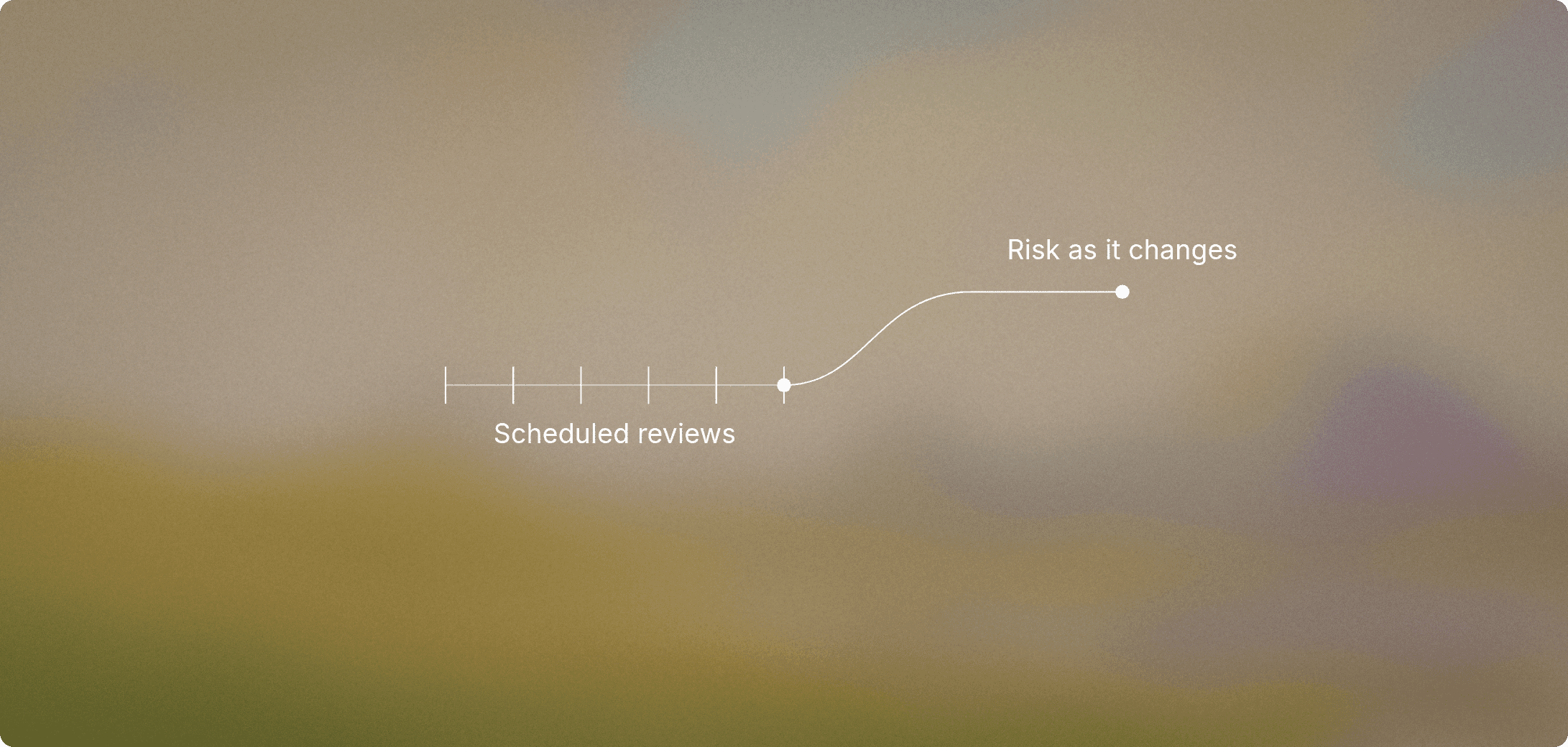
Perpetual KYB replaces the one-time check and the three-year calendar review with a lifecycle. A business is verified at onboarding, and its record is refreshed when something changes: a beneficial owner, a sanctions or adverse media hit, an expired document, a shift in risk tier. Each refresh produces a case that follows the same policy as the original onboarding and leaves an auditable trail.
The three customers below show that model at different scales and from different starting points. In each, the growth result (faster approvals, fewer drop-offs, no linear headcount increase) came from the compliance operation being redesigned, not from adding a faster screening tool.
bol: re-verifying 40,000 partners without rebuilding the team
Situation and challenge
Bol is a Dutch e-commerce marketplace with approximately 43,000 partners selling to consumers in the Netherlands and Belgium. Its customer due diligence (CDD) function assesses every selling partner against a risk-based policy that varies by country, business type and risk level. According to Josje Fiolet, Head of CDD, the program began as an internal ambition to maintain bol's reputation as a trusted platform. Regulation wasn't the starting point.
That scope creates two workloads. New partners need a review before they sell. The existing base of tens of thousands needs to be brought up to the same standard, which means re-verification at a scale most onboarding teams never plan for. Bol's published story doesn't give pre-Duna handling times, so the benchmark here is current performance.
Approach
Bol's CDD team reviews every partner who signs up, working from a single case file that holds the entity, the people behind it, the screenings, the watchlist hits and the prior decision history. The same file structure supports the re-verification of existing partners, so a refreshed case builds on the earlier decision instead of starting from zero. Details of the program are in the bol customer due diligence story.
Results
Active partner time on a new onboarding averages 12.2 minutes.
81% of partner cases close on first review.
New partners go through onboarding once and rate it 83 out of 100 in bol's post-onboarding survey.
Around 40,000 existing partners are being re-verified on Duna, at an average of 11 minutes of active time per case. That is roughly 7,300 hours of partner time across the base, by our arithmetic, spent once and inside the same workflow as new onboarding.
Evelien Mols, Project Lead, CDD at bol, describes the operational effect: "We have done more than 20,000 screenings on Duna at speed, because we can see everything in one overview, without pulling sources from multiple systems."
Lesson
Re-verification at this size is a throughput problem, and throughput depends on how little each partner has to do. An 11-minute average for existing partners and 12.2 minutes for new ones show that reverification doesn't need a heavier process than onboarding when both run on one policy.
SeQura: periodic reviews that no longer need extra analysts
Situation and challenge
SeQura is a Buy Now, Pay Later platform serving 4,000+ merchant stores and 1.5M+ buyers across Southern Europe. Its ten-person onboarding team had a tooling problem. Fuen Hidalgo, Head of Onboarding, put it plainly: "Before Duna, the team had to open one tool to verify documentation, another for screening. We were jumping from tool to tool."
The old stack averaged 243 minutes per case. Only 50% of merchants completed onboarding correctly the first time, so half of all cases came back for remediation. Periodic reviews multiplied the problem, because every active merchant had to be reboarded on the same slow path.
Approach
SeQura moved onboarding and periodic review onto Duna's policy-driven workflow, where the policy decides what evidence each merchant needs and the analyst works from one case view. It then reboarded 1,700 active merchants for periodic reviews on the platform, using the same machinery that handles new merchants. The full account is in the SeQura KYB case study.
Results
Metric | Before | On Duna |
|---|---|---|
Review time per case | 243 minutes | 14.9 minutes (16.3x faster) |
First-time right | 50% | 88% (a 76% increase) |
Periodic review queue of 1,700 merchants | Nearly 7,000 analyst-hours | Roughly 420 analyst-hours (about 6%) |
Two further figures: 95.2% of cases are approved, and active onboarding time per merchant averages 27.5 minutes. Nearly nine in ten merchants finish without remediation.
Rafael Alvares, Head of Product at SeQura, drew the growth conclusion: "Capacity used to be the constraint on growth. Every new vertical or market meant another round of hiring. With Duna running the policy on every case, the operation scales with the policy, not with cost."
Lesson
First-time right does the most work. Moving it from 50% to 88% removes the remediation loop that consumed analyst time and delayed merchants. The queue arithmetic follows: 1,700 cases at 243 minutes is nearly 7,000 hours, while 1,700 cases at 14.9 minutes is about 420.
A European e-commerce platform: growth without added headcount
The third example is compact and anonymized. Duna's resource "Why onboarding belongs on the COO agenda" describes a leading European e-commerce platform that needed to onboard a large number of sellers without increasing headcount. Using Duna's AI-native onboarding, the platform reduced SME onboarding time from eight days to less than one minute. It also cut follow-up cases by 53% and reduced onboarding drop-off by 37%.
The source doesn't name the customer or its volumes, so treat this as directional evidence. The pattern still matches the other two cases: fewer follow-ups, less abandonment, and no new analysts. A 53% drop in follow-ups means the policy collects the right evidence the first time, which is the same mechanism behind SeQura's first-time-right gain.
Plaid's MLRO, Araba Eshun, describes the day-to-day effect in the same resource: "Duna removes friction. Fewer manual checks, fewer back-and-forths, a more efficient way to work for our compliance teams." That quote comes from Plaid and is not about the platform above.
What implementation looked like
Neither the bol nor the SeQura story publishes a go-live date, so this article doesn't give one. Enterprise readers should ask any vendor for a dated plan and a reference who can confirm it. What the stories do show is where implementation effort goes.
Policy translation. Each customer's rules were expressed in Duna's policy engine, which turns KYB and AML requirements into code and lets teams back-test and change policy without engineering resources. This is where "policy-as-code" becomes practical. Bol's policy varies by country, business type and risk level, which is only manageable when the variation is encoded.
Data and registry coverage. Verification depends on pulling the right evidence per jurisdiction. Duna connects 210+ local registries and UBO registers, and orchestrates third-party data providers with smart routing and fallback, so a provider outage doesn't stall a queue.
Analyst workflow. The visible change for both teams was one case view in place of several tools. Bol's CDD team and SeQura's onboarding team both describe the end of tool-switching as the main working difference.
Integration complexity at the workflow level is modest by design: onboarding journeys are no-code, and the data layer sits between the customer's systems and the providers. Integration depth with a given core system will still vary, and it belongs in a scoping call, not an assumption.
Lessons that apply to perpetual KYB programs
Each point below ties to a number from the cases.
Fix first-time right before anything else. SeQura's move from 50% to 88% and the e-commerce platform's 53% cut in follow-ups show that the largest saving comes from asking for the right evidence up front, driven by risk and business attributes.
Run re-verification on the onboarding policy. Bol's 11-minute reverification average sits next to a 12.2-minute onboarding average. A separate review process would have needed its own tooling and training.
Keep one case file per entity. Bol's file holds the entity, its people, screenings, hits and decision history. That is what makes a re-verification auditable and reproducible, and it explains Mols's "one overview" remark.
Measure the queue in analyst-hours. SeQura's 7,000-versus-420 comparison makes the value of a periodic review program clear to finance and operations leaders in a way "faster review" does not.
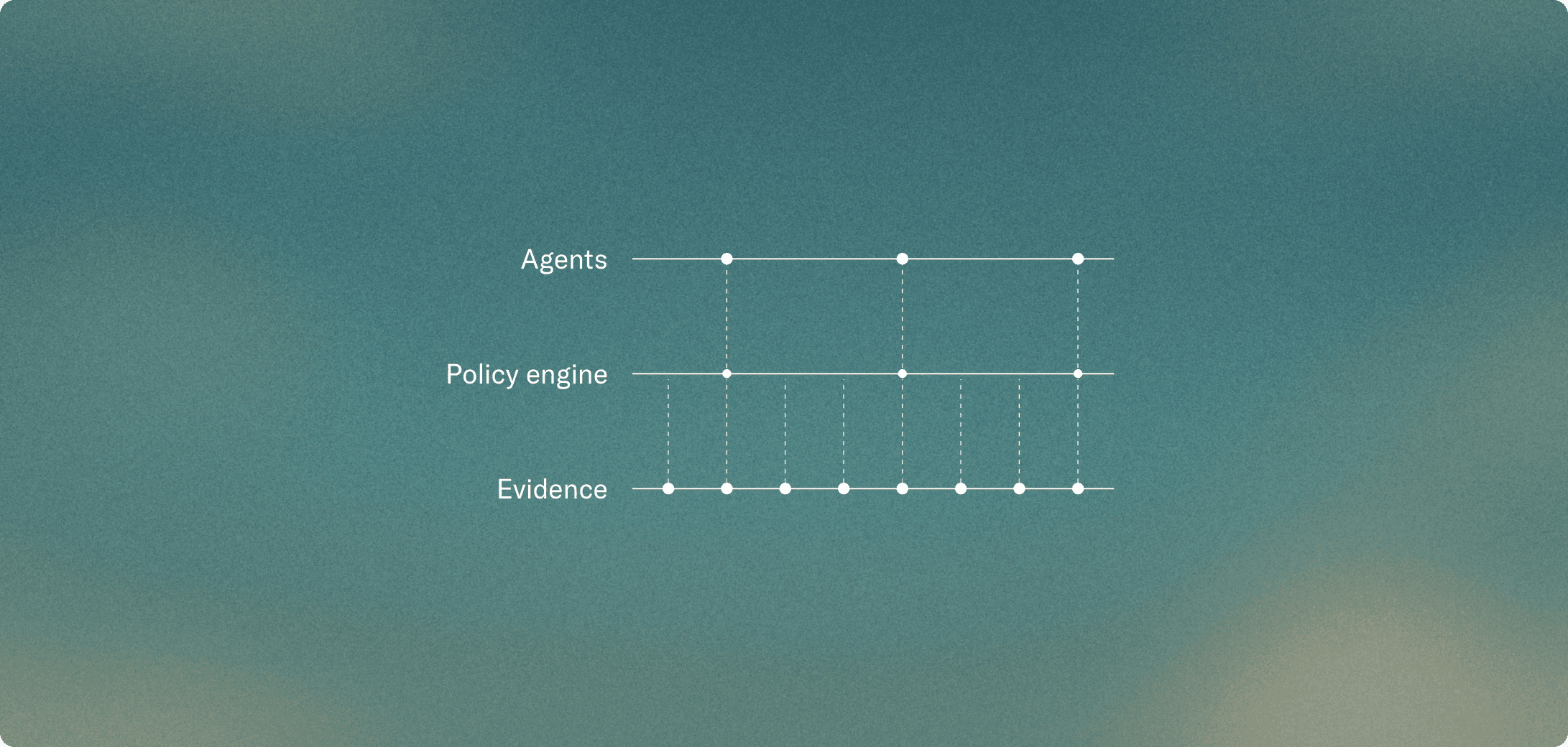
Treat daily screening as part of the lifecycle. Triggers such as sanctions or adverse media hits should open a case in the same system. Duna's guide to ongoing PEP and sanctions screening covers the control design for this, and its piece on reboarding explains why KYB designed only for onboarding breaks when reviews arrive.
One trade-off is worth stating. A policy-driven model puts more weight on getting the policy right. Teams need compliance and product owners who can agree on risk tiers and evidence requirements before configuration starts, and that internal work takes time regardless of the vendor.
How to evaluate perpetual KYB software
Feature checklists are where most vendor comparisons stall, and the cases above suggest a different order of questions.
Capabilities to require
Event-triggered refresh: ownership change, sanctions, adverse media and document expiry should each open or update a case without manual scheduling.
Policy-as-code with back-testing, so a rule change can be tested against past cases before it goes live.
A complete audit trail of interactions, decisions and policy changes for every automated KYB decision.
Cross-border registry and UBO coverage that matches the markets you operate in.
Reviews and re-verifications handled in the same case management system as onboarding.
Buyers writing a formal tender can map these to Duna's bank-grade KYB RFP requirements, and the AI-native KYB platforms overview explains why continuous verification is part of the category definition.
KPIs to demand in a proof of value
Active review time per case, for onboarding and for periodic review separately.
First-time-right rate and follow-up cases per hundred onboardings.
Analyst-hours for a defined re-verification batch, for example 1,000 existing customers.
Onboarding drop-off before and after.
Time to implement a policy change.
Ask each vendor for these numbers from a live customer, and ask what the customer's baseline was. On this evidence, Duna's published results (SeQura's 16.3x review speed and 76% first-time-right gain, bol's 81% first-review closure, the 37% drop-off reduction) set a reference level that other platforms should be able to match or explain.
The decision for enterprise growth leaders
The software that suits enterprise growth is the one that lowers compliance friction for the customer while keeping every decision defensible when a regulator asks about a beneficial ownership change or a missed review. These three cases show both outcomes at once: faster, cleaner onboarding for new businesses and a re-verification workload that fits inside existing teams. A shortlist should be judged on those two results, with the numbers in hand.
Continue reading



Industries
Customers
Company
Resources

Industries
Customers
Company
Resources
Industries
Customers
Company
Resources